
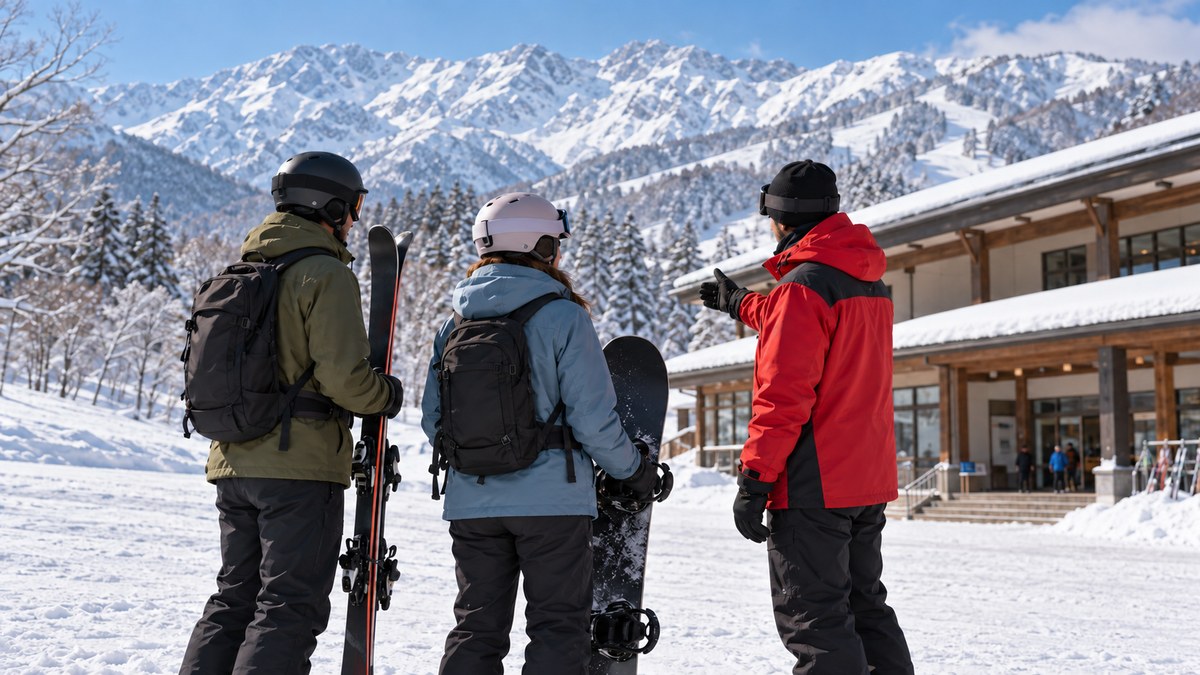
If you are hurt while skiing or snowboarding in Japan, one of the first practical questions is where to get treated, especially if you do not speak Japanese. This guide starts after the immediate response on the mountain. It shows you how to find a suitable medical institution, confirm it can see you, and prepare for the visit.
Warning
At a ski resort, ask patrol or nearby staff to reach the injured person. If an ambulance is needed, call 119 or ask staff to call; confirm someone has made the call. For a possible serious head, neck, or back injury, or if the person cannot move safely, avoid moving them and seek urgent help. Do not search for a clinic first.
Find medical care in Japan after a ski injury
Start with Japan's official visitor search
Open JNTO's (Japan National Tourism Organization) medical institution search, then select Search Medical institutions near the top of the page. The search lets you filter by area, language, and medical department. For a bone or joint problem, its guide lists orthopedic surgery as a possible department. The listing is a starting point, not a diagnosis or a promise that a doctor can see you immediately.
Choose the area where you are staying or where patrol has taken you. Search results based on your current location are ordered by straight-line distance, which may differ from the actual journey through a mountain valley. Check the address and travel route before setting out.
Call before you go
The official search gives basic information. It asks visitors to confirm opening hours, available languages, and treatment details with the institution. If possible, call and explain the injury, when it happened, and whether you need help walking. Ask whether the right department is open now, whether an English-speaking staff member is available, and what payment methods are accepted. An English filter does not guarantee English support at every hour.
If the facility cannot see you, ask where you should seek care instead. After-hours options vary by region. For a condition that needs urgent help, use the emergency route above instead of waiting for an ordinary appointment.
Finding English-speaking medical help
The JNTO Japan Visitor Hotline offers assistance for visitors in accidents and illness in English, Chinese, and Korean, 24 hours a day. Within Japan: 050-3816-2787. International format: +81-50-3816-2787. It is an information and support service, not ambulance dispatch.
If you are still at a resort, ask patrol or resort staff to help identify your location and explain where you can obtain care. When calling a medical institution, keep the resort or accommodation name and your callback number nearby. If a friend speaks Japanese, they may help with the call, but explain your own symptoms directly to medical staff when possible.
Prepare for the visit and payment
Bring your passport, a list of current medicines and relevant medical conditions, your insurance details, and a way to pay. The Fire and Disaster Management Agency's English ambulance guide lists a passport, medication, and cash or a card among useful items to prepare. The visitor medical guide also offers a personal medical information sheet and a sheet for pointing to symptoms. A phone copy is useful; keep important details accessible if your phone battery fails. Our ski emergency information checklist covers what to prepare before a trip.
At reception, give a short account of the fall or collision, the time it happened, and any change in symptoms. The JNTO-hosted visitor medical guide advises asking for a general cost estimate. Bring enough cash. JNTO's visitor medical guide notes that credit cards are generally accepted only at major hospitals, and smaller clinics often take cash only. Visitors without applicable health or travel insurance may need to pay the full cost of treatment. Medicine from a pharmacy may be charged separately.
Contact your insurer or assistance provider as soon as practical. Ask whether it needs to arrange a facility, approve treatment, or receive particular documents. Direct payment depends on the policy and the medical institution; do not assume that showing an insurance card means you can leave without paying. Keep the clinic's instructions, receipts, prescriptions, and any documents the insurer asks for.
After the appointment
Before leaving, ask the clinician to explain the diagnosis, medicines, follow-up plan, and whether travel or more skiing is appropriate. If the explanation is unclear, ask for it again or request language support. Follow the medical advice you receive rather than judging an injury by how it felt immediately after the fall.
If you received a prescription, check where and when to collect it and how to take the medicine. The visitor guide explains that a separate pharmacy visit and payment may be part of the process. Share the treatment documents with your insurer according to your policy's instructions.
FAQ
Can I walk into an English-speaking clinic without calling?
You may find a suitable clinic through the official search, but its listing supplies basic information only. Call first when possible to confirm hours, language support, the relevant department, and whether the clinic can see you.
Will travel insurance pay the hospital directly?
It depends on your policy. Direct payment is not guaranteed, and you may need to pay first. Confirm the arrangement with your insurer and the medical institution before relying on it.
What if I am still injured on the ski slope?
Ask nearby resort staff or another visitor to contact patrol and give your location. For urgent help, follow the Warning above. Our guide to what happens after a ski accident in Japan explains the mountain response; this guide covers finding medical care after that first step.
Save the official medical institution search and the JNTO hotline before your first ski day. If you need care later, you will know where to start without guessing from an old list of clinics.