.png)
A Step-by-Step Guide for Foreign Visitors
You're halfway down a run in Hakuba.
The snow is soft.
Visibility is good.
Then it happens.
You catch an edge.
Your ski twists awkwardly.
You try to stand...
...but your knee won't support your weight.
Your friends stop beside you.
Someone asks,
"Should we call an ambulance?"
In Japan, that's usually not the first step.
Most ski accidents follow a process that many international visitors have never experienced before.
Knowing what happens next won't prevent an accident—but it can make an already stressful situation far less confusing.
Every Resort Is Different
The exact procedure varies between ski resorts and depends on the severity of the injury.
However, the process below reflects how accidents are commonly handled at major Japanese ski resorts, including those in Hakuba Valley.
Step 1 — Contact Ski Patrol
If the accident happens inside the resort, ski patrol is usually your first point of contact—not the ambulance.
If you're riding with friends, ask one person to stay with the injured rider while another contacts the nearest lift operator, ski patrol member, or resort staff.
According to Hakuba47 Ski Patrol, providing the following five details as accurately as possible helps rescuers locate the site and respond faster:
- The location of the accident (e.g., "middle of Route 1" or "right side of Route 1 looking down from the top")
- The injured person's gender and approximate age
- Whether they were skiing or snowboarding
- The color(s) of their clothing
- A description of the injury (which body part, whether there's bleeding, etc.)
The more accurate the information, the easier it is for patrol to locate you.
Don't leave the injured person alone unless absolutely necessary.
If someone must leave to alert patrol, another person should stay with the injured rider while also warning approaching skiers to reduce the risk of another collision.
Step 2 — Ski Patrol Assesses the Situation
Once patrol arrives, they will first make sure the accident scene is safe.
Their priorities are generally:
- Protecting the injured person
- Preventing secondary accidents
- Assessing the injury
- Deciding how the rider should be transported
Many visitors assume ski patrol simply calls an ambulance.
In reality, patrol members are trained to assess the situation before deciding what level of medical care is required.
At resorts such as Hakuba47, patrol members include personnel trained in first aid, CPR, avalanche response, and mountain rescue.
That means they are often able to make informed decisions before emergency medical services become involved.
POINT
Ski patrol's first priority isn't getting you off the mountain quickly.
It's making sure moving you won't make the injury worse.
Step 3 — How Will You Get Off the Mountain?
Not every accident requires an ambulance.
Depending on your condition, there are several possible outcomes.
Minor injuries
If patrol determines that your injury is relatively minor, you may be able to ski slowly back to the base area on your own.
Moderate injuries
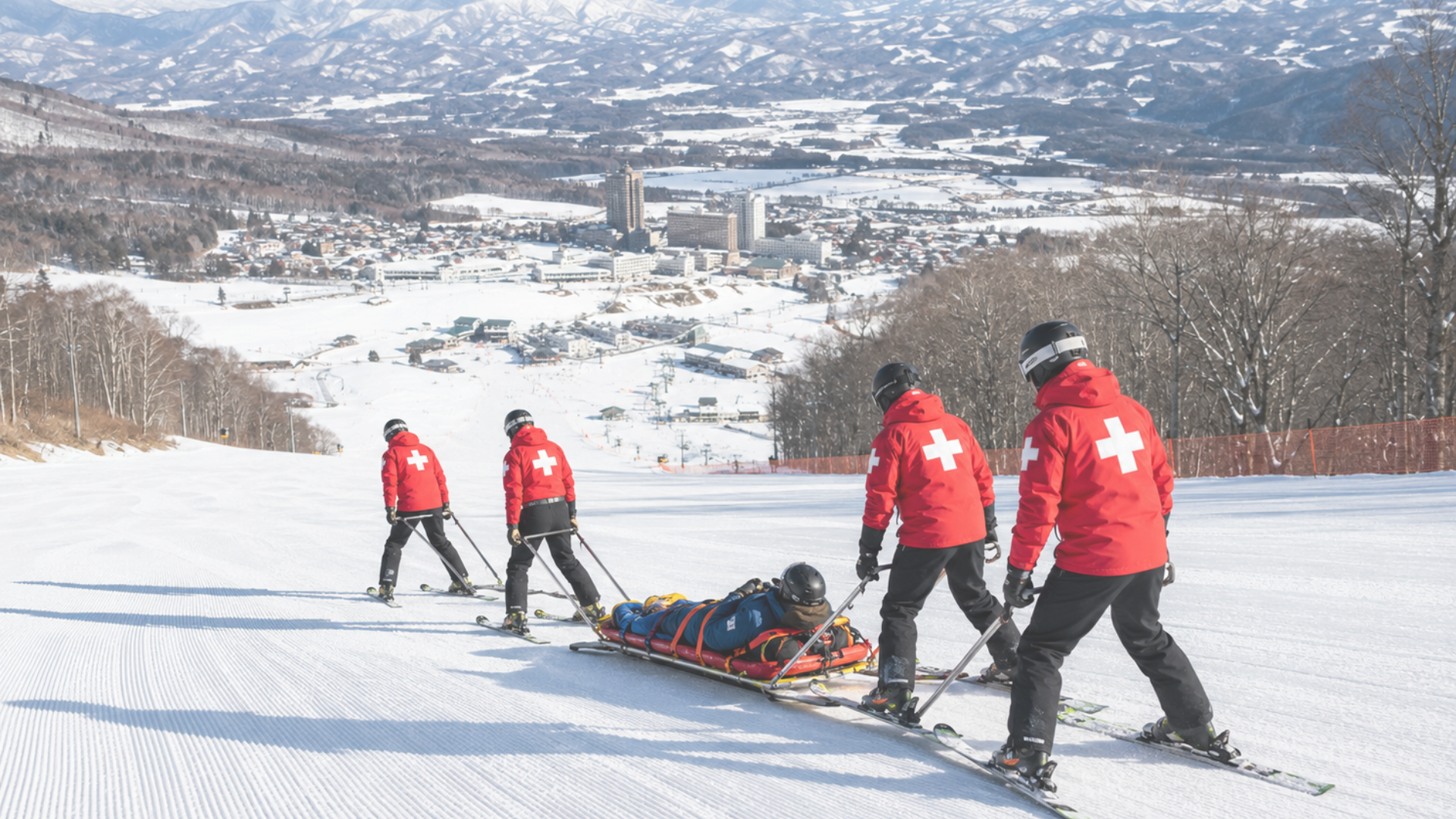
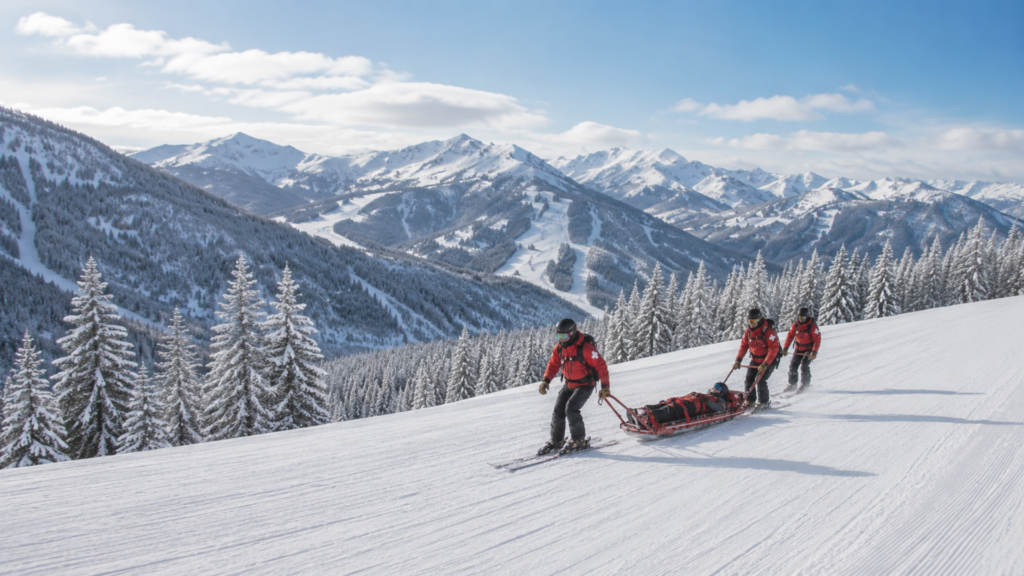
If skiing is unsafe but your condition isn't life-threatening, patrol may transport you using a rescue sled.
These sleds are designed to safely move injured riders down the mountain while minimizing further injury.
Serious injuries
If patrol suspects a fracture, spinal injury, head trauma, or another serious medical emergency, they will coordinate with local emergency services.
Depending on the situation, you may then be transferred by ambulance for further medical care.
Step 4 — Not Every Injury Goes Straight to a Hospital
This surprises many visitors.
Being injured does not automatically mean you'll be taken directly to a hospital.
Depending on the situation, patrol may recommend one of several options:
- Returning to your accommodation and monitoring the injury
- Visiting a nearby clinic
- Going to a local hospital
- Immediate ambulance transport
The decision depends on factors such as:
- Your symptoms
- The suspected injury
- Whether you can walk
- Whether emergency treatment is required
In many cases, ski patrol—not the injured visitor—helps determine the most appropriate next step.
PONIT
Hakuba47's patrol team is made up of 13 members, including SAJ-certified patrollers, Japan Red Cross first-aid providers, and specialists trained in avalanche control.
This is why patrol members are often able to assess an injury and decide on transport before emergency services are even involved.
If your accident happened outside the resort boundary, the rescue process can be very different—and rescue costs may increase significantly. Learn more in our guide below.