.png)
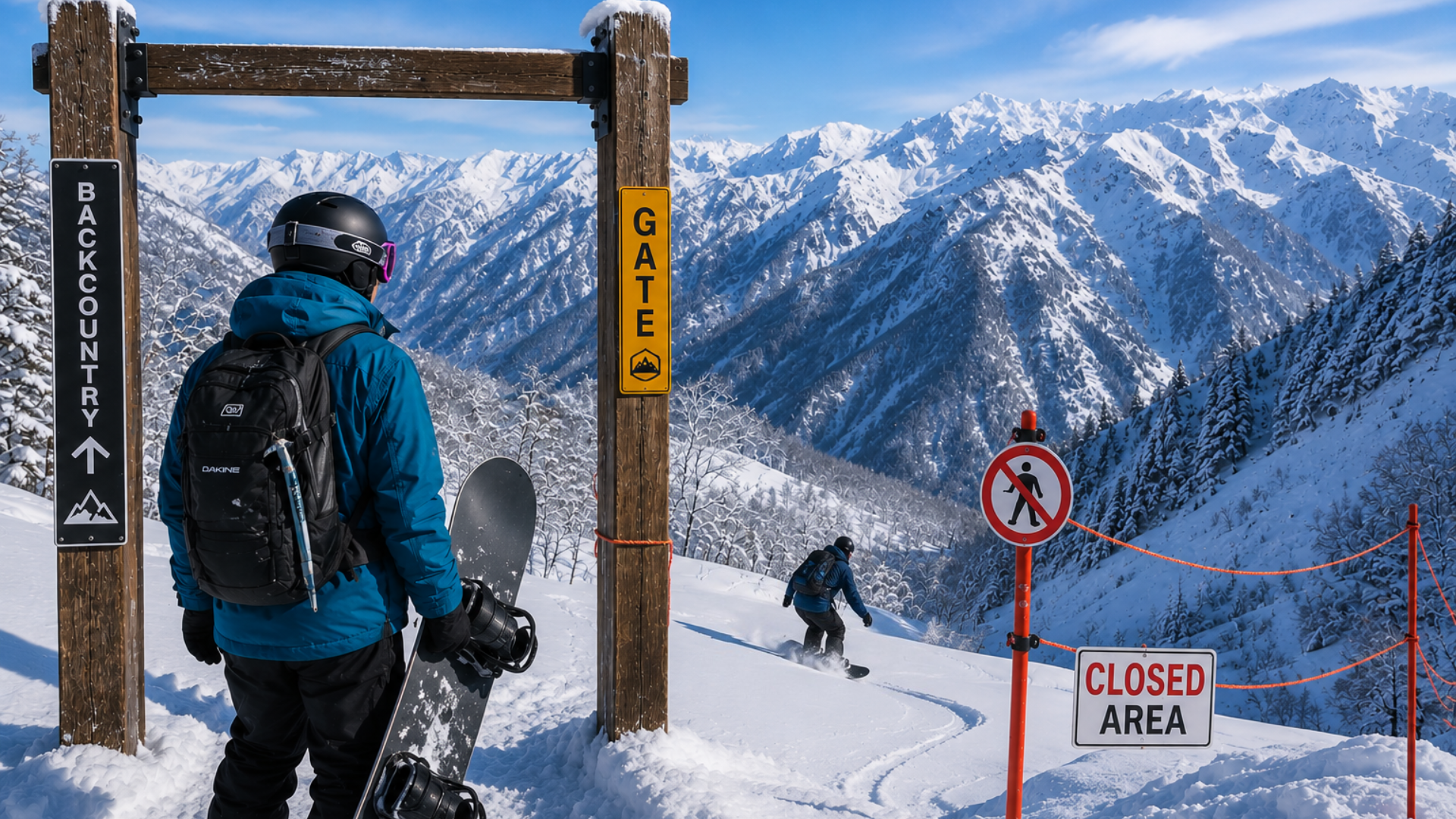
Every winter, thousands of skiers and snowboarders travel to Japan chasing deep powder, legendary tree runs, and the famous “Japow”
experience - Sooner or later, many visitors hear conflicting advice.
Some say off-piste skiing is completely illegal. Others insist you can ride anywhere and nobody will stop you.
Neither is true. The reality is more nuanced — and understanding it matters more than most visitors realize.
In Japan, some off-piste terrain can be accessed legally, while other areas are strictly prohibited.
Understanding the difference is important not only for your safety, but also for your insurance coverage and potential rescue costs.
Short Answer
Off-piste skiing is not automatically illegal in Japan.
But entering closed or prohibited areas, ignoring ropes, or bypassing official access systems can have serious legal, financial, and safety consequences.
Why So Many Visitors Get Confused
Part of the confusion comes from the fact that Japan's ski resort system differs from what many visitors are familiar with.
In North America, Europe, Australia, and New Zealand, resort boundary systems vary significantly.
Visitors often assume the same rules apply everywhere.
Social media makes the confusion worse.
A rider posts a video from deep powder in the trees. Someone sees it and assumes:
"If they rode there, it must be fine."
But what's invisible in that video is how they entered the terrain. In Japan, that detail matters — a lot.
What Does "Off-Piste" Mean in Japan?
Generally speaking, off-piste refers to terrain outside groomed ski runs.
Examples include:
- Tree runs
- Ungroomed snow
- Sidecountry terrain
- Backcountry terrain
- Areas outside marked pistes
The key point — and where most visitors go wrong — is this:
off-piste does not automatically mean prohibited. Whether terrain is accessible legally usually comes down to how you entered it.
Off-piste ≠ Prohibited Area
Most visitors treat these as the same thing. In Japan, they are not.
What Is a Prohibited Area?
A prohibited area is an area that resort management has specifically closed.
These closures may exist because of:
- Avalanche risk
- Cliffs
- Terrain traps
- Unstable snow conditions
- Rescue limitations
- Operational hazards
Prohibited areas are often marked by:
- Ropes
- Bamboo poles
- Warning signs
- Closure notices
- Ski patrol barriers
Crossing these boundaries is commonly known as:
Rope ducking
And this is where problems begin.
A rope is not a suggestion.
In Japan, ropes and closure signs are official safety boundaries established by resort management.
The Gate System Explained
One of the unique features of many Japanese ski areas is the gate system.
Hakuba is one of the best-known examples.
Instead of allowing unrestricted access everywhere, resorts provide specific gates that allow riders to leave the managed resort area and enter backcountry terrain.
By using an official gate, you are effectively leaving the resort and entering mountain terrain under your own responsibility.
This system exists to balance:
- Rider freedom
- Avalanche safety
- Rescue operations
- Resort liability
Using an official gate and ducking a rope may both lead to powder snow.
But under the rules, they are very different actions.
Why Rope Ducking Is Different
This is the distinction many visitors fail to understand.
Using an Official Gate
- Follows local rules
- Patrol understands where riders enter
- Accepted within the local system
- Insurance coverage is more likely to remain valid
Rope Ducking
- Violates resort rules
- Enters closed terrain
- May trigger insurance problems
- Creates additional rescue risks
| Official Gate | Rope Ducking |
|---|---|
| Follows local rules | Violates local rules |
| Accepted access point | Unauthorized entry |
| Patrol knows where you entered | Patrol has no record of your entry |
| Insurance usually remains valid | Insurance may be denied |
| Lower legal risk | Higher legal risk |
Can Insurance Refuse to Pay?
Potentially, yes.
Most travel insurance policies contain clauses related to:
- Gross negligence
- Reckless behavior
- Violation of local rules
If a rescue investigation shows that a rider ignored closure signs, crossed ropes, or entered prohibited terrain, an insurer may decide that the rider acted negligently.
In that situation, a claim could be reduced or denied entirely.
This is one reason understanding local rules is not just about safety.
It is also about protecting your insurance coverage.
What Happens If You Ignore the Rules?
Most visitors assume the worst that can happen is losing their lift pass.
In practice, the consequences can be far more serious.
Potential outcomes include:
- Rescue operations
- Medical bills
- Search and Rescue (SAR) costs
- Insurance claim disputes
- Significant out-of-pocket expenses
A private helicopter rescue in Japan can cost well over ¥1,000,000 before medical treatment even begins.
Understanding the rules before you ride is far cheaper than learning them during an emergency.
How to Ride Legally and Responsibly in Japan
If you want to enjoy Japan's off-piste terrain while minimizing risk:
- Use official gates whenever available
- Respect ropes and closure signs
- Carry proper avalanche equipment
- Check local rules before riding
- Understand your insurance coverage
- Ride with experienced partners
- Monitor weather and avalanche conditions
Before You Drop In
☑️ Understand local resort rules
☑️ Use official access points
☑️ Carry avalanche equipment
☑️ Check weather conditions
☑️ Verify insurance coverage
☑️ Never duck ropes
The Bottom Line
Many visitors ask:
“Is off-piste skiing legal in Japan?”
The better question is:
“Which off-piste terrain is legal to access?”
In Japan, off-piste skiing and snowboarding are not automatically illegal.
But not all terrain is treated equally.
Official gates, designated access systems, and local resort rules exist for a reason.
Understanding those rules helps protect:
- Your safety
- Your insurance coverage
- Your finances
- The future access that riders enjoy today
The best powder day is the one you can safely tell stories about afterward.
→ See our breakdown of helicopter rescue costs in Japan
Planning to Ride Off-Piste in Japan?
Before your trip, confirm your insurance explicitly covers off-piste skiing, backcountry riding, and Search & Rescue (SAR).