.png)
You crossed an ocean for Japan's powder. Don't let that adventure end with a debt that follows you home for years.
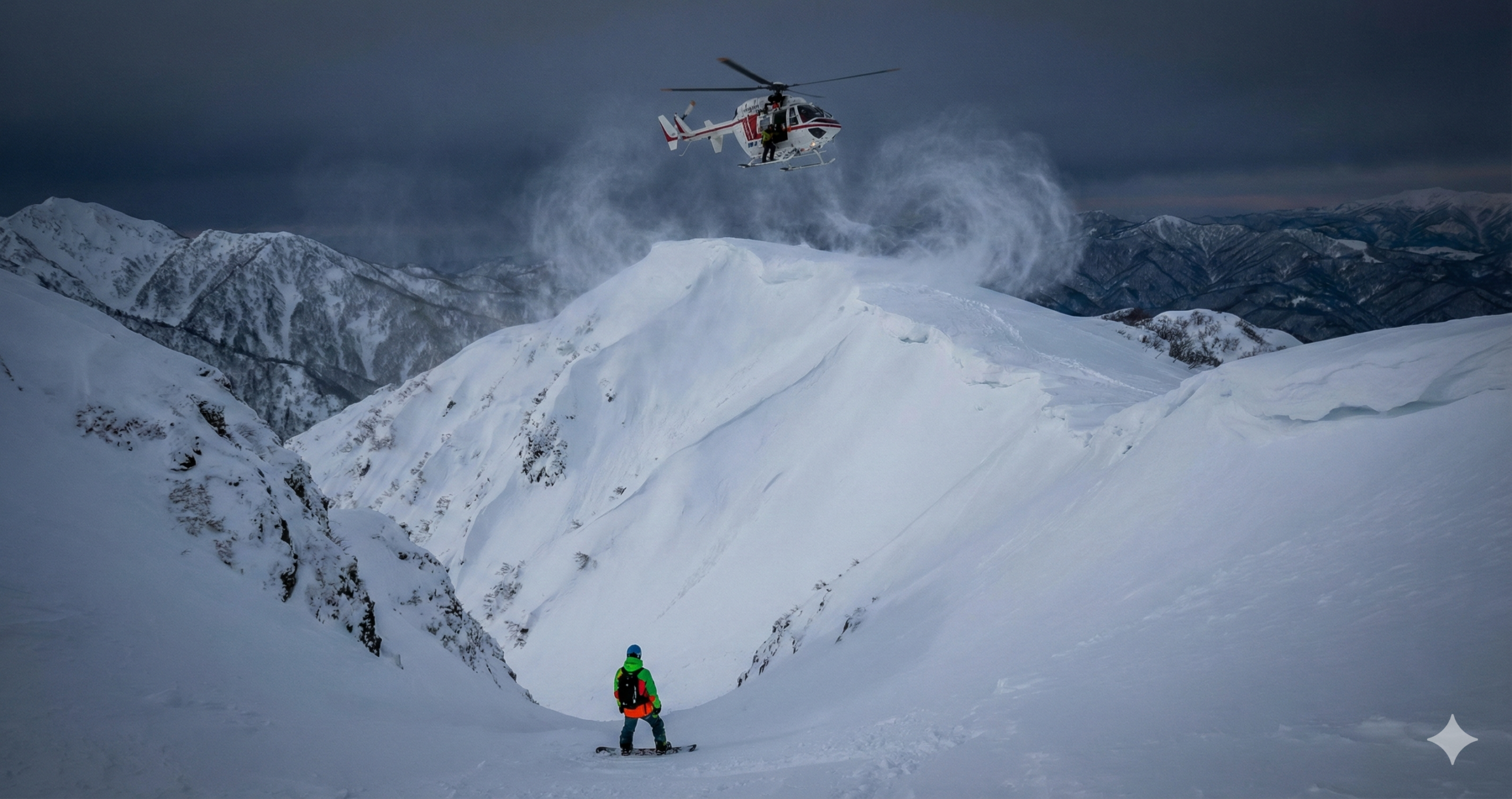
Reports of tourists getting lost — and rescued — in Japan's mountains are making headlines every season. What most visitors don't realize is that rescue here is never free. Here's the reality, backed by numbers and law.
It's Not About Your Nationality — It's About Who Saves You
There's no rule that says "free for Japanese, paid for foreigners." Whether you get a bill comes down to one thing: who responded to your rescue.
Public services (free): If police or fire department helicopters and personnel handle your rescue, there's no charge. However, public teams are often unable to respond in bad weather, at night, when multiple incidents occur simultaneously, or when a technical search is required.
Private organizations (paid): That's when private helicopter companies and local Mountain Rescue Prevention Associations (Sangaku Sounan Boshi Taisaku Kyogikai) are called in. These are not volunteers — they are professionals, and the moment a private operator is involved, costs for personnel and equipment begin to accrue.
In popular areas like Hakuba, private teams are deployed frequently to prioritize speed. In practice, the risk of ending up with a paid rescue is far higher than most riders expect.
What a Rescue Actually Costs
When private teams are mobilized, every item below becomes your bill.
| Item | Estimated Cost | Notes |
|---|---|---|
| Private rescue helicopter (flight time) | ¥10,000–¥20,000 per minute | Covers all time from takeoff to landing |
| Full helicopter mission | ¥1,000,000–¥2,000,000 | Average for a mission of approximately one hour |
| Ground search team (per person) | ¥30,000–¥50,000 per day | Based on association guidelines. 5 people = ¥150,000+/day |
| Miscellaneous expenses | At cost | Fuel, meals, specialized equipment |
Important: These figures cover search and rescue only. Hospital treatment after evacuation is billed separately.
Why Medical Bills for Foreign Visitors Run 200–300% Higher
Getting rescued is just the beginning. Once you reach the hospital, a second financial shock awaits.
Travelers without Japanese public health insurance are billed at full out-of-pocket rates (jiyuu shinsatsu) — and those rates are typically two to three times the standard cost. This isn't discrimination. There are clear reasons behind it:
- Administrative and interpretation costs: Producing medical reports in English, coordinating with international insurance companies, and arranging medical interpreters all require significant labor.
- Non-payment risk: Collecting unpaid bills from someone who has returned to their home country is nearly impossible. Hospitals price that risk into their rates.
- Legal basis: Under guidelines from Japan's Ministry of Health, Labour and Welfare, hospitals are permitted to set their own per-unit pricing for private-pay patients — often two to three times the standard rate.
A fracture requiring surgery and hospitalization can easily generate a medical bill of several million yen, on top of any rescue costs.
Leaving an Unpaid Bill of ¥10,000 Can Get You Banned from Japan
"It's too expensive — I'll just go home and deal with it later." That approach no longer works in Japan.
The Ministry of Health, Labour and Welfare and the Immigration Services Agency currently share information. An unpaid medical debt of ¥10,000 or more can be flagged as a serious violation and added to a watchlist. Under Article 5, Paragraph 1, Item 14 of the Immigration Control Act, anyone deemed likely to "harm the interests of Japan" may be denied entry at their next border crossing.
A fun snow trip could end not just with debt — but with a permanent ban from ever returning to Japan.
Conclusion: Your Insurance Is Your Ticket Back
The mountains will be here next season. If you want to come back, check your coverage before you ride.
- Does your policy adequately cover Search and Rescue (SAR) costs?
- Are backcountry and off-piste activities explicitly included — not excluded?
The right insurance costs a few hundred yen — or a few dollars — per day. Going without it can cost you a life-changing debt and your ability to return to Japan.
Check your insurance before you drop in.
For a comparison of insurance options covering backcountry and off-piste skiing in Japan — including World Nomads, SafetyWing, FastCover, and Tokio Marine — see our insurance comparison page.
You can also check World Nomads directly to review current coverage and pricing for your country of residence.